Showing posts with label History. Show all posts

Sunday, November 10, 2019

Putting flesh and life into your ancestors using context - Ancestors in 52 Weeks

This year's challenge is 52 Ancestors in 52 Weeks and is run by Amy Johnson Crow.

Topic Info:
Our ancestors are more than names and dates on a chart. This week, share something that you've learned that brought more context to an ancestor's life. Have you learned why she moved from one area to another or why he held a certain occupation? Tell the story this week.

I tell people I help with looking up information the facts are the bones. However you need get to get other things to put the person together or to put flesh on the person. These other things could be finding yearbook, directories, and newspaper articles and/or talking to people about them. This week's post is is talking about doing exactly this - putting the flesh and life back into the ancestors.

I've done this several times with examples I've used here on my blog posts. These were like with my 2x great grandfather Jules among others. But if you don't have some of these clues, like they disappear after being in the newspapers, this in itself is also telling and I always ask and wonder- what are you hiding?

Where to start?
For people who have never done any research before they always ask "Where do I start?" and I tell them at the beginning which means yourself. I've actually taught a class for beginners and have done this.

Credit
When the people look confused, and they always do, I tell them put down what you know. Full name at birth. Your birth date and the full name of your parents. List siblings if you have then and their ages at the time of your birth. Then I ask do you know where the family lived when you were born. When/where did they get married? Divorced? Remarried? This is the basic stuff which is called Birth, Death or Marriage or BDM or vital records information which is recorded by most officials after a laws were passed to collect this information by governments.

Context - The next step
Then you go on to fill in when or what year you started daycare? School? Sports? Death of grandparents/parents/siblings come next. And the list goes on and on. By the end, they should be able to look down the list and feel like this is them.
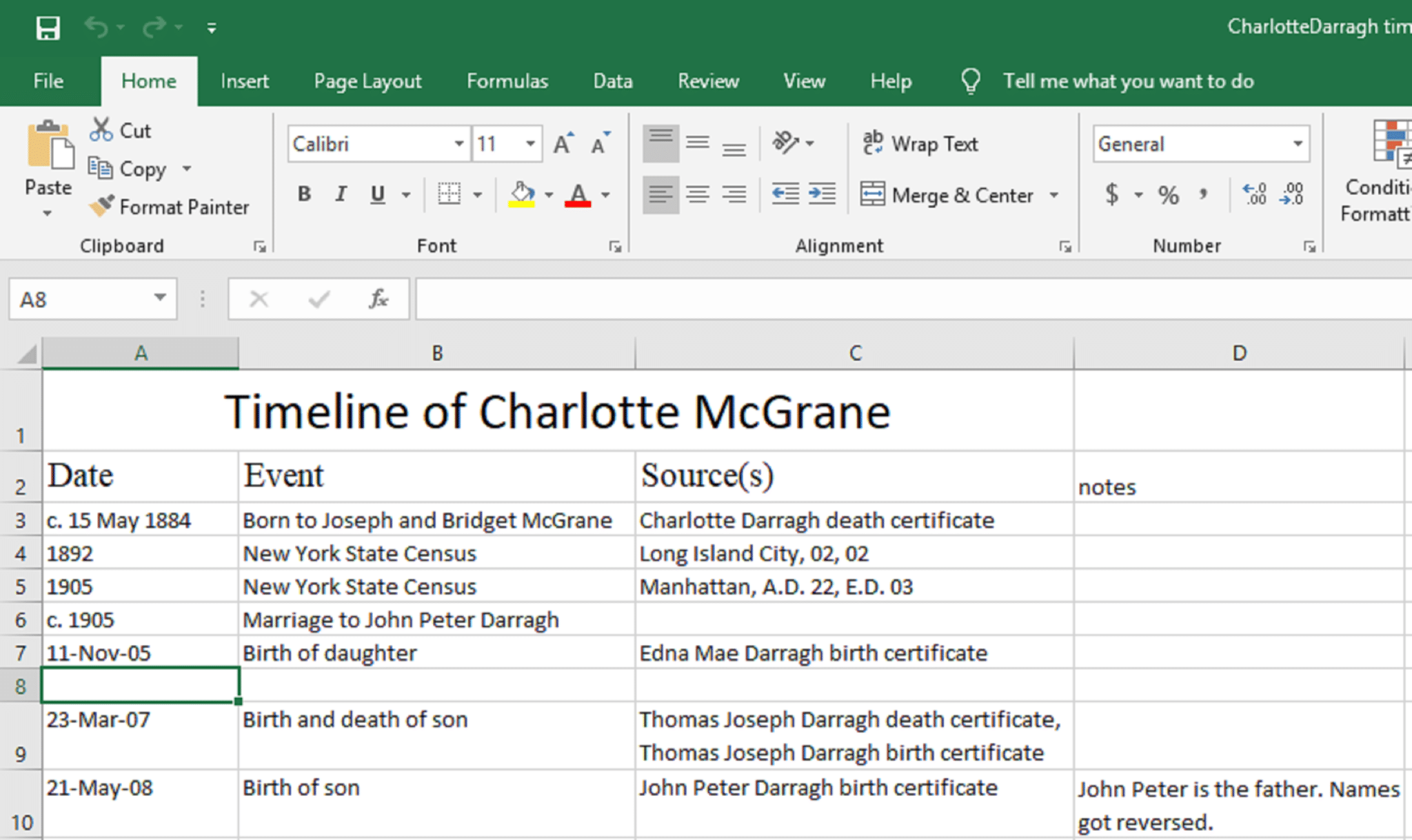
One of the many ways you can make a timeline of information for your ancestors. Credit

Once the people feel like they have listed everything about themselves, then they start with their parents the same way, then the grandparents. Usually by the time you hit either the grandparents or sometimes even the parents you don't have much, but what you do know you list because this will tell you where to look next.

Using history and locations
You list what things formed or might have formed the ancestor are you researching. Was something in the world that happened which affected them, you or what you/they did? Put it into the timeline. People usually do it for later in life, but if the person you're researching lived in Europe, why not use what happened in history to help with their entire life timeline from start to finish? This might give reason why they might have moved or travelled places.

For instance, my grandfather, who was born in Rheinland, Germany left there in the 1926 and set off for the United States. Why? Why did he do this?
Border of France and Germany after WW1 in 1918-1919. Rhineland is where it says League of Nations notice the 1926 year above? Credit
I went looking to see what was happening in this part of Germany during this time. At first I thought hyperinflation started, but this happen around mid-1921. This being said, it ended in late 1923, but the economy is like a huge ship in the middle of the ocean. When you try and turn it, it takes a long time to get there so this could be a reason why.

This would have affected the unemployment as well. But was this a "problem"? During the hyperinflation, unemployment had been high and in 1926 there were about 2 million still unemployed, but started to slow down and continued to do better until 1929. This, too, could have been a factor.

I think the main reasons was the demilitarization of the zone they lived in.  It was completely given back to Germany by 1930, but by then Hitler was on the scene and had violated the Treaty of Versailles and the Locarno Treaty or Pact which was signed in 1926. The Locarno Treaty/Pact reinstated the boundaries of Germany.

All the above, might have pushed him to leave Germany behind and go live with his aunt and uncle in Brooklyn.

True, it might not have done anything, but at least it does give everyone a bit of what was happening in (my grandfather's) Mathias' world and some reasoning behind his decisions. 
The beginning timeline for my grandfather Mathias. Credit: J. Fitzgerald
What else to use?
There is much more context information you could look up. It all depends on where they lived and if they made the newspapers or not.

Did they play cards to raise money for a charity? Did they let kids in their river for them to donate money to an emergency services? Did they eat something which made everyone sick? Did they get a parking, speeding or fine for being drunk? All this could be reported in the newspaper, gazettes, etc. Believe it or not, I've had all of these come up in the researching I've done. 

I even had one poor guy think the train had stopped and opened the door and stepped out only to find the train was still moving. True it was reported he had been drinking too. This was for a headstone I found when I took some photos to upload onto a volunteer website and I went looking for information on the poor guy and imagine my shock at this information. 

Sometimes there's just nothing you can find and so you have to let it go for a while before coming back to it in the future. 

Is context 100%?
Using context is not 100% (is anything really?), but it does give you more of what their lives were like and what they had been dealing with. It might have even been something like a fight with his parents and off he went to the US but we'll never know for sure. 

However, it lets everyone know there could be more to the story and the reader of your notes gets to learn a bit of history of the area from around where your ancestor came from. 

Sunday, July 2, 2017

July 4th and what its meaning is to me - then and now

Growing up July 4th always meant the summer, fairs, swimming and fireworks. When I was a young adult, it just seemed like it was a holiday to be thrown in there. I couldn't (and still can't!) stand the crowds and all that goes along with it. It just seemed to be too much. Of course, when you don't have two pennies to rub together, that might play into things as well. 
Credit 
Anyhow, then I moved from the US to Australia and as its not a holiday here, it just slips by. We have gone over to visit the US during the July 4th time, but wouldn't you know? We could not find any fireworks and I even asked and one person said there might be some but it was a drive to get to. It was like everyone barred the things that year. 

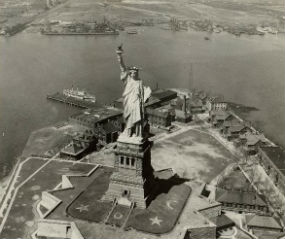
However, this year? I'm thinking about it because of my genealogy work. My first ancestors to hit the US was in 1892 and was on my maternal side - Alois and Jules Gauquie. This was just a handful of years since The Statue of Liberty's dedication in 1886. I can only imagine what it was like for them. 

Then I think about my paternal side - Adam Wojtkowski. This was the first person on that side to arrive in the US in 1913. True, it was many years since the dedication but I think Adam would have found the statue's meaning and quote even more than the Gauquie's. This was due to the restrictions of rights that had been going on in Poland since before Adam was born and those restrictions were only getting worse. 
Adam's Manifest from Ellis Island's website. The other Wojtkowski (name spelled wrong but all other info correct) people were of same village - not relatives.
Can you imagine not being able to speak your own language in your own country? How about one day being able to go to school and the next being told you can't go to school anymore? Or even having the right to walk down the street and run into a soldier and then being told to go back home even though you were going to do some food shopping (and having very little food as it is) and the soldier not allowing you to keep going and forcing you to turn and go back home without any food? All this was what was going on in Poland. 
1905 May 19 from The Sun in NY NY taken from Chronicling American newspaper section
In each of these instances, although the Gauquie's knew family in the US whereas Adam didn't really  know anyone, you still bought and got onto the ship not knowing if you were going to make it to the US or die on the ship OR if once you got to the US you would be denied from entering the US for some reason and then get shipped back. This was the reality of people immigrating from Europe. One family came, I believe, because they didn't like how just a bit of their rights were being taken away (the Gauquie's from what research I have done). Whereas the other side, had every single thing you can think of taken away just about (the Wojtkowski's from what research I have done). The tale of 2 European groups coming to the US but under such different circumstances! 

My paternal grandmother told me many times growing up about how when they came into the NY Harbor (in September 1920) and saw the Statue of Liberty standing so tall and beautiful with the sun behind her and the water twinkling like jewels, she felt safe and happy for the first time in such a long time. She knew then and there that she had hope and freedom and that's what that lady in the harbor stood for. The whole and each time she told me about this, she had tears in her eyes. The only other time she was like that was talking about her parents. This is what the 4th of July means to me. 
Taken from the National Parks Service website
Taken from the Wiki site
You could feel the change before today, and some say it started after September 11th and how today's children would never know about feeling like how we did in our youth. Here's the story if you want to read it and I have to admit for most of it the author is correct. However, what makes me feel dirty is the current situation within the USA. 

People turning on others just to do it - over anything and everything. There are things going on in the last 6 months and I'm actually - for the first time EVER - ashamed to be an American. If this is making America great again then I'm stumped by how. People shooting others and killing just over 300 times since the start of the year, a president that insults
From Mass Shootings Tracker.org
others and reminds me of things I've seen in the playground by bullies, the government - who we pay for their public service - (which is supposed to make the US people feel reassured about their government) are blocking or delaying live feeds from the White House Press Secretary which is not reassuring anyone about their competencies but makes you wonder what they are hiding and the list goes on and on. 


You should hear about what the international press are even saying about Trump and even if I wanted to try and defend him, you can't. Why? Because he does stupid things like calling people names or re-releasing  a video from years ago and instead of a person's head he amends it to put a News
Taken from Twitter
company's name on it? Further to all of that, he's 'beating' (its a wresting thing but in the eyes of children - during when this clip has been getting paid they will see it - they will think this is alright especially if the President is doing it) up a person or something that has a common media logo on it. The whole thing is just screwy. 


I can just see the people who put so much into the Statue of Liberty which was a symbol OF liberty just shaking their heads and crying. Why? Because American used to be so much better than it is currently. 

Taken from Wikipedia 
I leave you with this part of the famous within The New Colossus:


"Give me your tired, your poor,
Your huddled masses yearning to breathe free"


This is what America is about - not what its become over the last 6 months. 

Wednesday, March 9, 2016

The No Issue issue

Have you ever come across an ancestor who has had what they termed "No issue"? This is when the person has had no children. This can be both with men and women. Have you ever thought of what the ancestor must have gone through when they were dying or getting elderly and never had any children? No one to keep their memories or values alive and to be passed along?

Us on our wedding day May 1997
Most people, in my experiences, just say "they had no issue so we didn't look at them" and move on to another ancestor. Its like they didn't matter because they had no offspring to grow the family tree. I have to admit when I started researching my family history, I heard of it but hadn't run into it myself. Most people in my family have at least 1 child.

However, in the last 15 years, I've slowly, over the years, have come to know what these people must have felt through personal experience. My husband and I got married in 1997 and we wanted things to settle down and then we'd look into starting our family. We got married, I settled into living in

Australia, became a permanent resident here, and had we had stable jobs. We decided to go to the doctors to start on the journey of adding to our family of 2 (my husband and myself). The doctor was very upbeat and encouraging and we started on this road. Meanwhile, we bought and built our house thinking it was only a matter of time, and now we knew we would need help, to add to our family.

Our Pregnancy we named Jamie Sweetpea in 2003 which had to end.
In 2003, we became pregnant and thought things would now start to fall into place there. However, we soon realized it was not to be as it wouldn't survive as it was in my tube so it was either the baby or myself. We did become pregnant a few other times but it never stayed for long. By this time over 7 years had gone by and we knew we were in trouble. We eventually found ourselves in IVF and doing IVF.

Meanwhile, our friends and family have had children and moved on and drifted from us. We found ourselves on the outside looking at the range people we had in our lives and found they didn't want to invite us out or over because they had children. We became the "too difficult and too different" couple. Then there were the conversations with people talking about their children and then them looking at you and saying either through looks or through words "you wouldn't know anything about this because you're not a parent". Eventually, we found ourselves not even trying to keep relationships going.

If this is how hard it in the 2000-2016, can you imagine how they must have felt back in the 1900's or before? What did they end up giving up or were excluded from because they didn't have a family like everyone else? My heart breaks for them each and every time I see someone refer to an ancestor which had No Issue.
Found at https://encrypted-tbn3.gstatic.com/images?q=tbn:ANd9GcTGbkJrqeBoqLV_14wUNUNP2_kdA8Mrq-NAqEiGBP91ptVREO8-

I understand. We're in that basket with them. 

Our story doesn't end here for us. In late 2015, things took a tragic turn. We learned I had a medical condition and would never - ever - be able to carry a child full term. True we could use surrogacy if we ever won the lottery, but its very expensive and a very long process if you got to do it. Yes, we're still looking into it, but since things happened in late 2015, I feel more kinship than ever before to those people who have been classified as having No Issue.

I hope we're not two of the forgotten ones in our history just because we might have No Issue under our names.

All I can ask is for you to remember those people with No Issue under their names matter too - they've lived, loved and were just the unlucky ones who couldn't have children. Please take a look at them and remember them - after all they are your family too.

Sunday, August 9, 2015

Putting History together with family stories - Paternal grandmother and great grandparent's memories

Lately, I haven't been around as much. Besides, trying to find employment, I've been researching and trying to make sense of some stories which were told to family. Sometimes its from the person who immigrated to the new country and sometimes its a memory of what was said or told to them by people who immigrated. It doesn't really matter who told the story, as long as these stories were and are not forgotten.

By talking to the older generation still with us, we can find out things their parents and grandparents told them. It could be a memory, a grunt with a few words... anything. Each of these memories - no matter how short they are all add up to things that mattered enough in their lives for them to remember them.

In fact, I have a few stories which I'll share about my paternal grandmother's side of the family. I knew my grandmother growing up and she's the only grandmother I do remember other than the few visits with my maternal grandmother.

1979 My paternal grandmother and myself in Newburgh, NY
Some of the stories are:

Story: Grandma kept saying "There are German soldiers on every block, so be quiet and watch out." - Her granddaughter, Theresa, shortly before Genowfa passed away.

Fact: She grew up in Poland, which was occupied by both German and Polish soldiers. When Ober Ost was created in 1914, (my grandmother would have been 4 years old at this stage) it controlled everything with an iron fist. You could not move without a solider asking you want you were doing and why. In fact, this meant you could not visit friends or
even family without a good reason. This was the reason why my grandmother talked about German soldiers on very block - to make sure you weren't leaving the district. It must have been very difficult for them as they lived near the edge of the lands that made up the Ober Ost.

The lived approximately 75 miles or 105 km away from Brest Litovsk (in the red on the lower left side).

Story: I know when I was growing up she used to say when she was my age they always had Germans, Bolshevist's, KGB agents around.

New-York tribune. (New York [N.Y.]), 19 Sept. 1914 Part of letter to editor
Fact: This is due to the ongoing in fighting between the Germans and Russians. Prior to 1914, the land my grandmother lived on was claimed as Russian - as it had been for over 100 years (since the 3rd and last partition). Then from about 1914 until about 1917 it was German territory, and then it went back to Russian only for the land to be set back to an independent Poland in 1919 but it wasn't until 1920 it was formally acknowledged. 

Story: My grandfather (my grandmother's father) used to sit there and curse the Bolsheviks and Russians.

Fact: This is due to the armies coming through the towns and being terrorized by them. Many people had been killed or disappeared just because they were thought to have said something against the Russian or Bolsheviks. They would tell the press and governments they were doing doing something good, only for the opposite to be true and the only ones to know it would be the people who lived there.

And the stories go on and on. Do you have stories like these for your family? I would recommend to either write them down or record them on either video or voice recorder. This is so you can have the story and use history to actually put fact with the stories you are told.

The Sydney Morning Herald, Monday 7 October 1918 


What if they are not true?
Many times people might actually either mistake what's been said or have lied all together. Why? Well it could be they only wanted "good" things to be told, they embellished them so their life would seem exciting, or third, and not a good one, would be to try and throw you off of where they grew up for some reason unknown to you.

In my experiences, I've had all of these either done to me or known of people who have had them done to them. In some cases, we just don't know and either the person is gone or is not willing to talk about why they did something. You can either keep it inside of you and let it simmer away which does nothing but anger and upset you or you can let it go and try and understand why they've done it and let it go. Most of us do the first and after awhile, hopefully, we can do the latter.

Is it easy to do? Of course not! However, I know I have bigger and better things to do with my emotions and energy than on something that's happened and I cannot change.

That being said, even the untrue or tainted stories ARE still apart of your history. You have to embrace it, note it, and then let everyone know that it is not true and your reasons for discounting it. You never know, something might have happened and its not until years later when information is released or found, it might just turn out to be correct after all.

Sept 2007 at Movie World in Queensland Australia
Genealogy is a roller coaster - just hang on and enjoy the ride!